Almost Done

After a lot of work there is light at the end of the tunnel. I have scheduled Catalpa’s launch for next Wednesday, July 25. We’ve been working diligently to complete as much as we can before splash day. Frequently temperatures in the shed are well over 100 degrees so I’m generally up at 5:00am working. I put a thermometer up on deck and it reached 109 a few days ago. HOT!

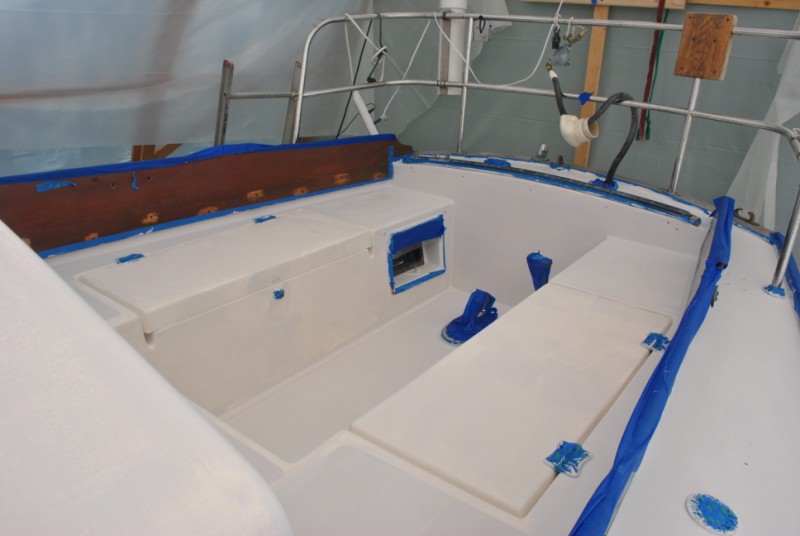
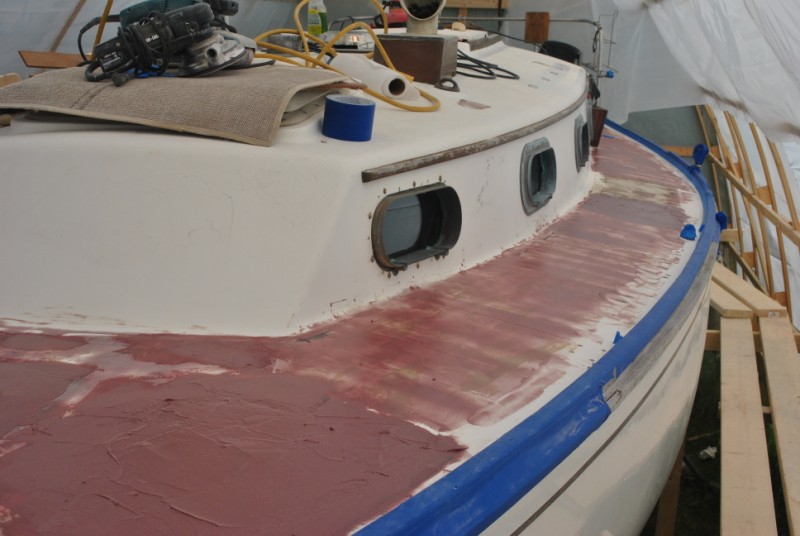
After the primer was completed I again sanded the boat and applied 4 coats of System 3 LPU paint. The paint job is not perfect. There are some brush marks and bugs but in general, I’m happy with it.
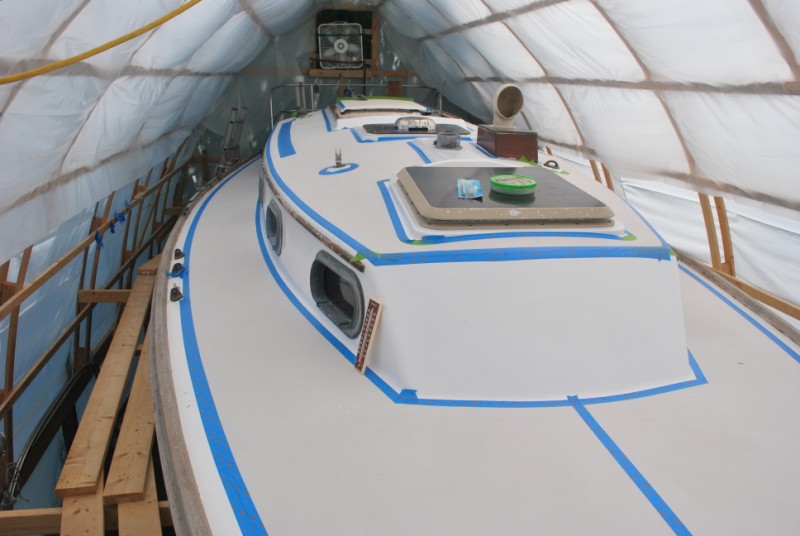
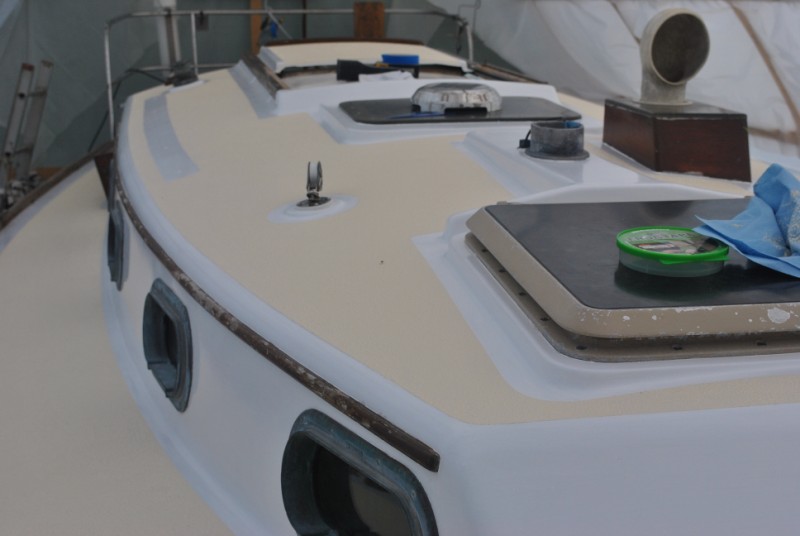
The paint seems very hard and durable so I feel it will last a long time. This paint was applied to all of the areas that don’t get non-skid paint (SKID?). So the skid is a shiny white.

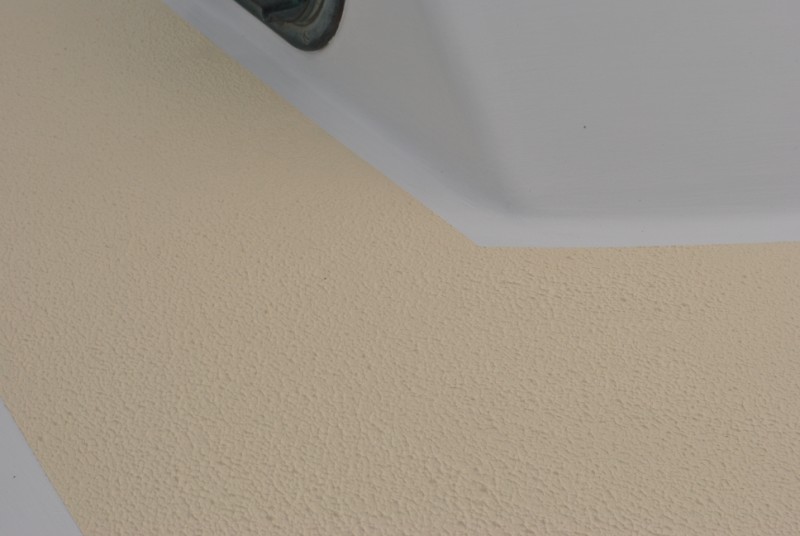
After this was completed I re-taped for non-skid. For this I used a product called Kiwi-Grip.
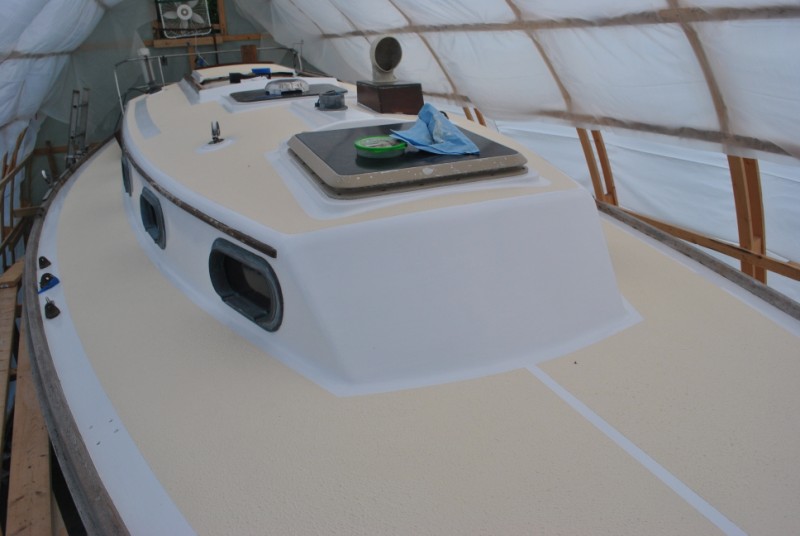
This is a water based product that goes on very thick with a notched trowel and is then rolled out with a special roller. I’m pretty impressed with how it came out. The only problem I’ve had is that it seemed to have taken a long time to completely dry. Therefore, some of it got a little dinged up in the work that followed. If it needs it, I’ll roll on another coat next winter. I like the texture and color. I hope it holds up well.

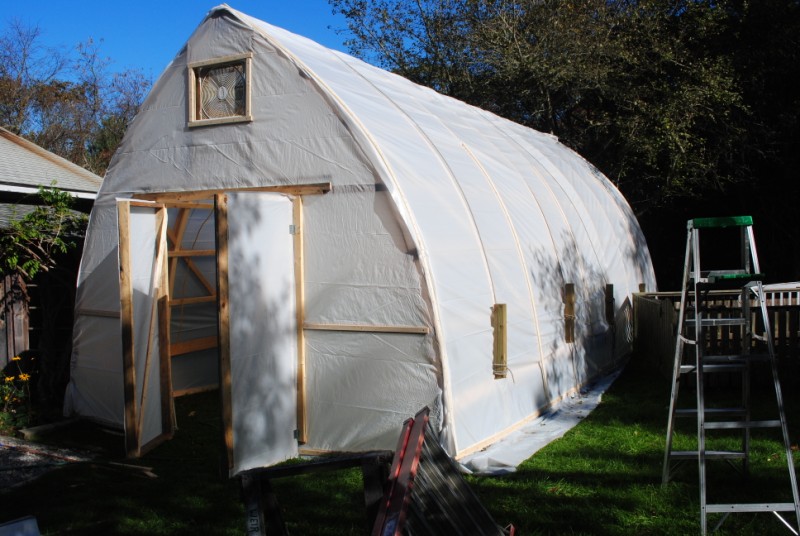
My poor shed is going to pieces. I’ve cut many holes in it to try to vent out some of the heat. The other day I ripped
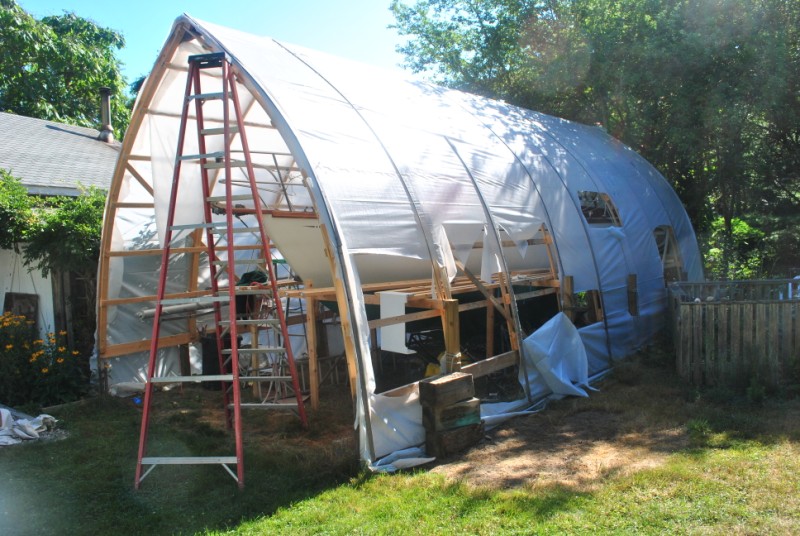
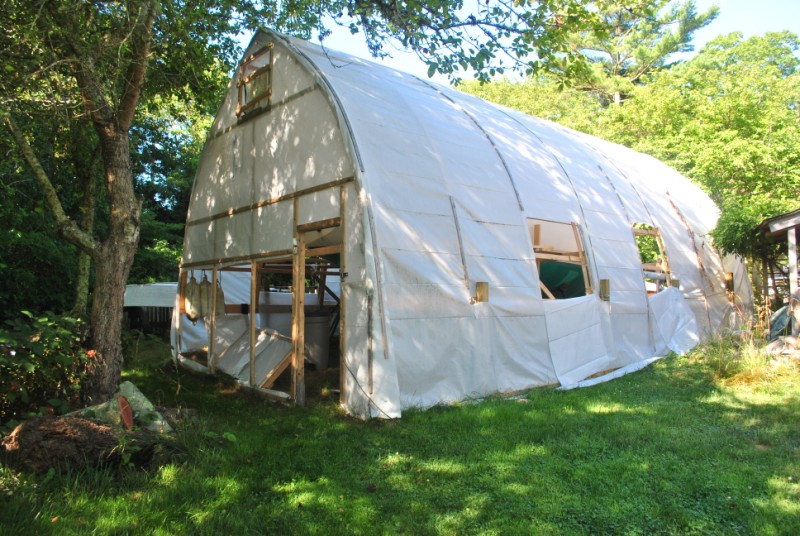
the whole front wall off. It’s done its job and held up really well through windy days and winter squalls. I’ve enjoyed having a huge hangar to work on my boat in but it will be nice to get the yard back.


We’ve re-bedded most of the hardware that was removed from the deck. Now I’m just checking a bunch of small stuff off of the list. The one additional large job that I decided to add was stripping and redoing the teak. I’ve got 2 coats of “Cetol Marine” down and one or two more before launch day. Normally, I use Epifanes Varnish but I decided to try something new. In the past Cetol always
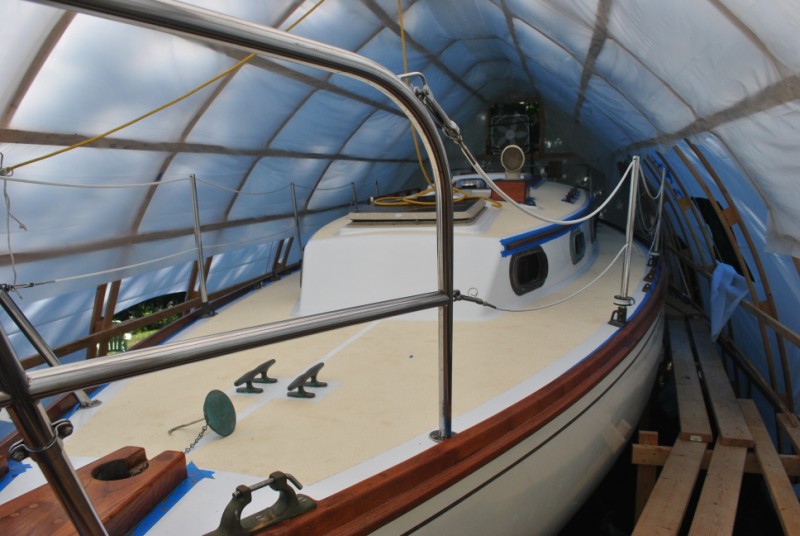
looked a bit too orange to me but this is their natural teak formulation. It’s more of a light brown tint.

I can’t wait to get out on the water.
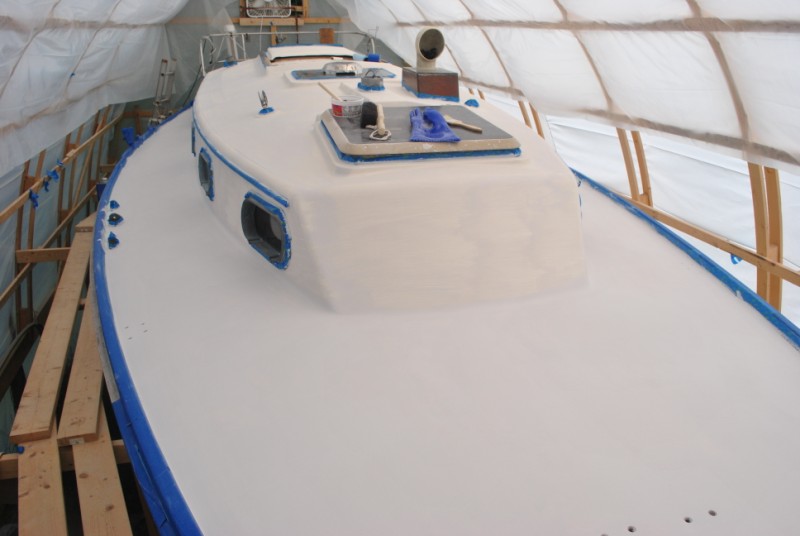
Primer

Things are starting to look a little better. Over the past few days I did a ton of sanding and fairing. My longboard is now welded to my arm and my finger tips are sanded off. I could have done some more filling and fairing but I decided to call it “DONE”.

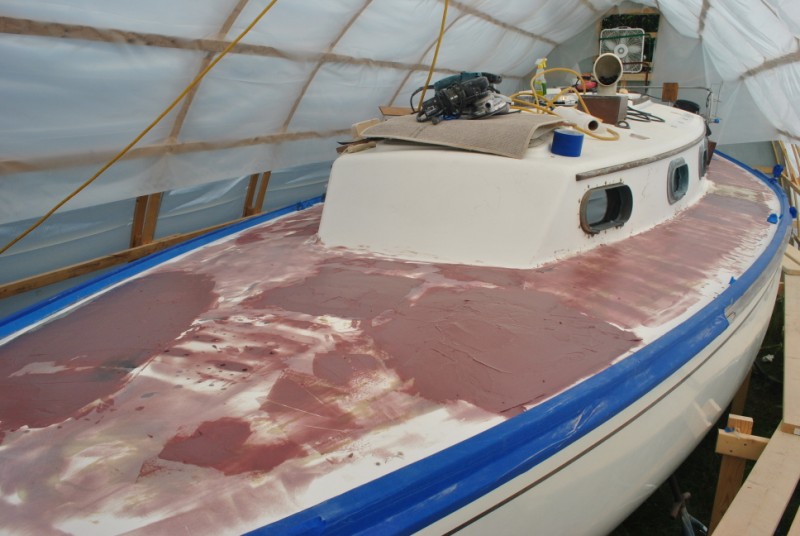
For primer, I decided to use “Interlux Interprotect 2000E with micro plates”. Try to say that 10 times fast. It’s not really a traditional top sides primer. It’s normally used under the waterline as a barriercoat to prevent osmotic blistering. I liked the big name and the fact that it is billed as a barrier coat. It’s a 2 part epoxy with some heavy duty solvents. I’ve had to where a respirator while working with it.

It took quite a while to get all of the dust off of Catalpa. I bought a new HEPA filter for my shop-vac and wiped her down with alcohol several times. I rolled the decks and painted the cabin house with a good brush. The first coat covered all of the cracks in the deck. I intend to get at least three coats over all of the critical areas.

The taping took more time than the actual painting. My co-captain took over the taping duties so I could get away from it for a little while.

The primer is going down fairly smooth. I’ve had to add extra solvents to it due to the heat. Once this is done, it’s back to sanding again. Then onto gloss paint.

Fairing the deck

Over the past few days I’ve had some opportunity to do a bit of thinking. What percentage of my life has been spent sanding something? I bet that it is a pretty big number. I sand everything. Every single thing I have ever created has been sanded. You’d think I enjoy sanding. I don’t. Over the winter I started brewing beer as a hobby. Beer doesn’t get sanded and it helps relieve some of the pain created by sanding all day.

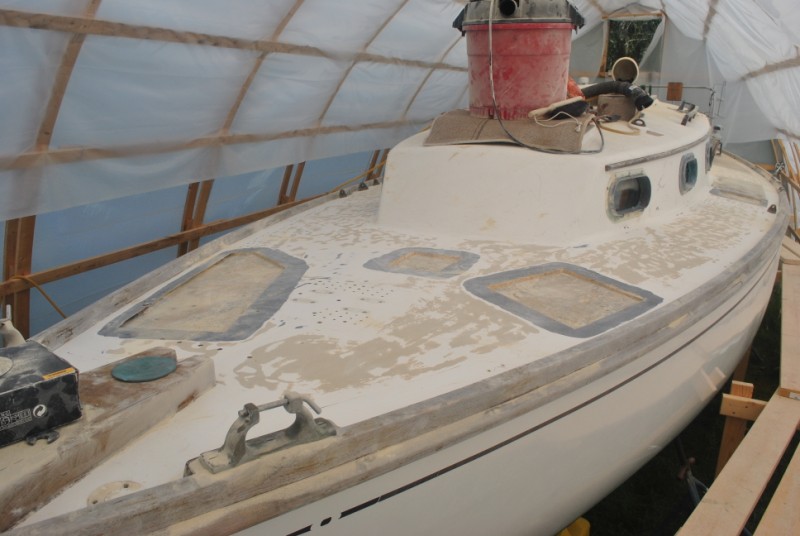
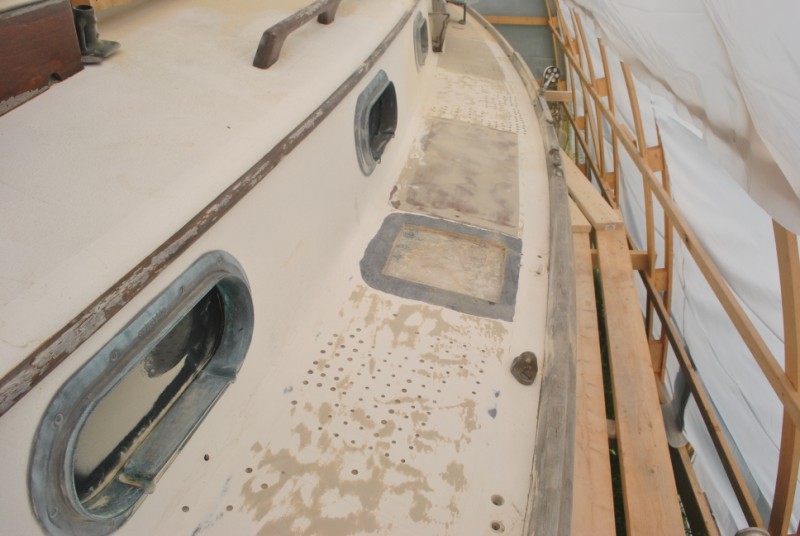
The deck work is progressing. I’ve patched the large areas with new balsa and three layers of fiberglass. All of the various drying holes have been plugged too. The deck has a lot of uneven areas due to repair work and grinding the original non-skid gelcoat off.

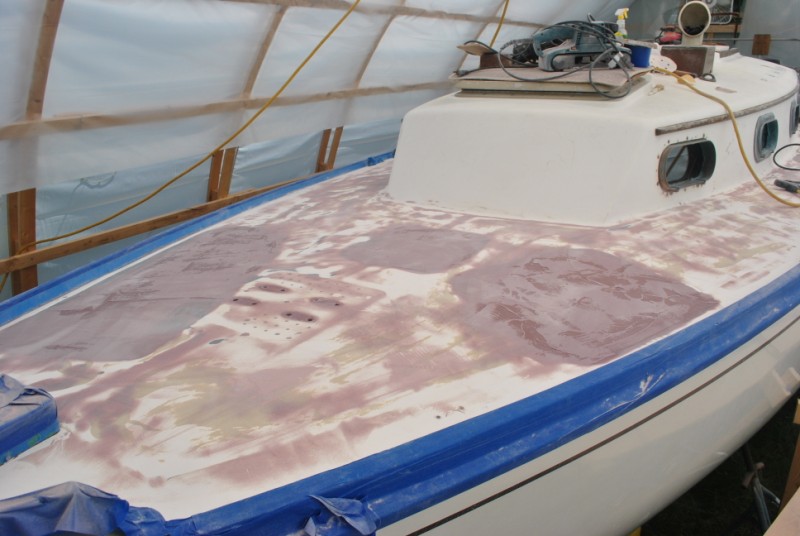
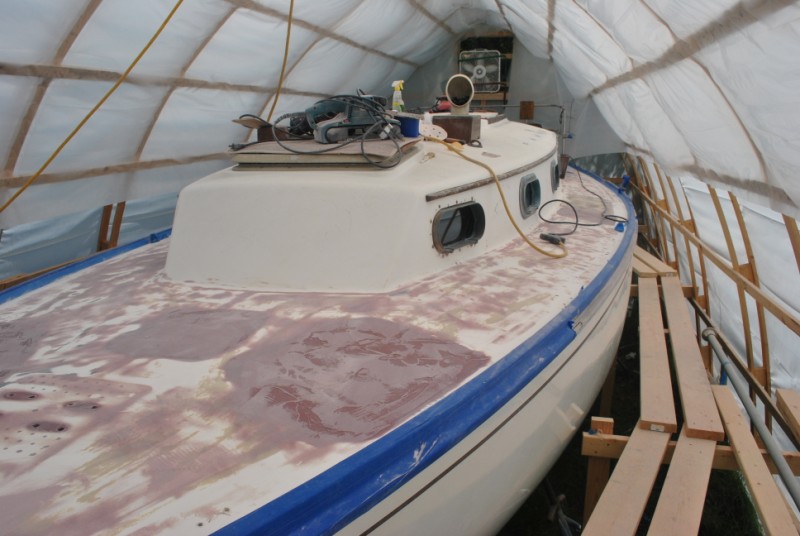
In the first couple of pictures you can see the most recent application of epoxy based fairing compound.

This stuff goes on the deck and then you basically sand most of it off so it fills in the low spots. I use a big 6″ random orbit sander and a long-board. I made the long-board by gluing a  40grit belt (belt sander) to a piece of plywood. It works well and also promotes a good upper body workout.

The last 2 photos are post-sanding. I still have one or two more coats of fairing and then the first coat of epoxy primer.

Big Fiberglass Mess

Work has progressed slowly since my last update. The New England winter was pretty mild this year. I probably would have been able to complete most of my project but it has been a busy winter. As often happens, the boat work was delayed.

The main reason for enclosing Catalpa was to explore and repair the extensive deck damage. The deck consists of a top and bottom layer of fiberglass that encapsulates a balsa wood core. The gel-coat that covers the deck is very thick but unfortunately the top layer of fiberglass is very thin. This top layer has got many stress cracks in it. This allows water to penetrate into the balsa core which creates all sorts of problems. With the help of a moisture meter, and by drilling core samples, I was able to find the extent of the problems.

Back in November I started cutting into the deck. Where I found rotten balsa, I completely removed the top skin and the balsa core. In areas where I found high moisture, but the balsa was intact, I decided to drill the deck with many holes to allow the moisture to escape the core material. Essentially the deck has been drying out for the last six months or so. It worked well. I checked everything again with the moisture meter and it is dry.

Next step in the process is to grind all of the gel-coat nonskid off of the deck I can’t match the many numerous repairs with the old nonskid so I plan on replacing it with a product called Kiwigrip. More on that later.

Anyway the deck grinding continues on. The shed is acting like a greenhouse now so the temps are probably close to 90 degrees around mid day. Add to that a hooded tyvek suit, dust mask, and ear muffs, you get a very disgruntled boat worker. Most of the destructive work is done. I’ll soon be moving on to fixing things. My goal is to launch by mid July.

Plastic walls

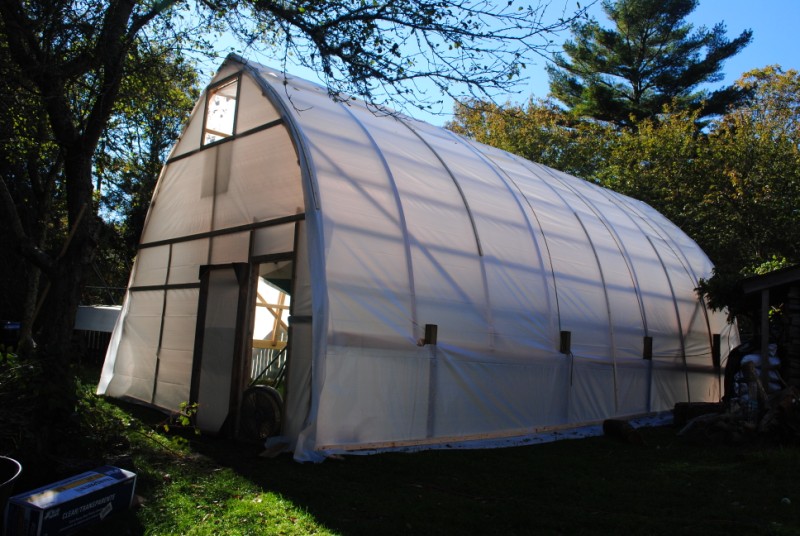
I closed in the shed last week. After much debate, I decided to use regular 6mil construction plastic to cover it. My other option was greenhouse plastic. Construction plastic has no UV resistance, greenhouse plastic does and lasts 4 years or more. I intend to have Catalpa back in the water next summer so I think the construction plastic will hold up for that long. It was half the price.

Hanging the plastic on the frames was a frustrating and difficult job. The pieces for the sides were 32 x 20. I should have enlisted help but I needed to get it done. I had about a two day window where there was no wind. This time of year we seem to have ‘small craft advisories’ every day. Putting up the plastic in 30+ knots of wind would have been impossible. The day after I finished it the wind went up to 40 and it held together. We have some kind of winter storm advisory for this weekend so the shed is going to get tested again.

I still have a few things to do on it. I’m having condensation issues on the inside so I’m going to hang some more plastic to keep the moisture away from the deck.

I was able to winterize the motor and get a few small projects done so some of my boat work has started. It feels good to actually start working on the boat and not the shed. Naturally the shed took up twice the amount of time and probably cost more than I anticipated. As a rule any boat related project seems to go that way so I’m not surprised.

Framing the shed

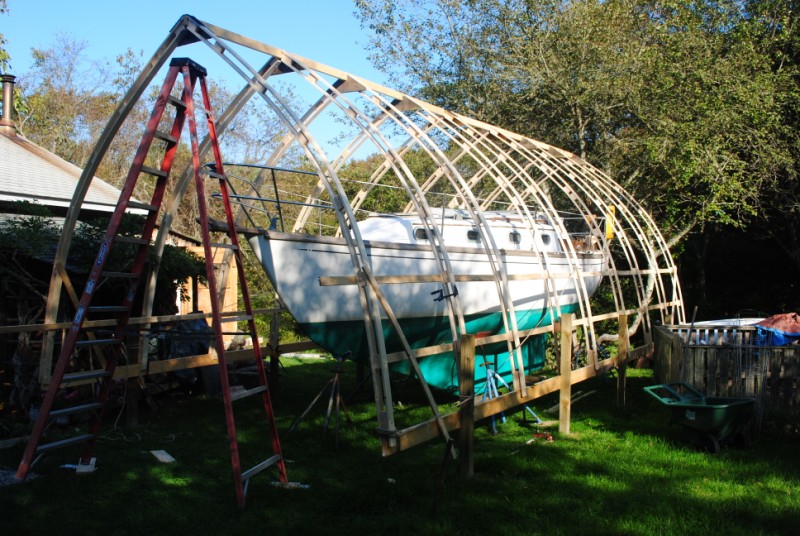
Bow production went well this time with the stock that I milled. It took around two days to make up everything. I broke a couple pieces but they mostly went together with no problems. The leaves are coming off the trees so I’d like to get the shed closed in before fall is in full swing. It has a nice looking shape to it. Boat Cathedral? Next I have to frame the end walls.

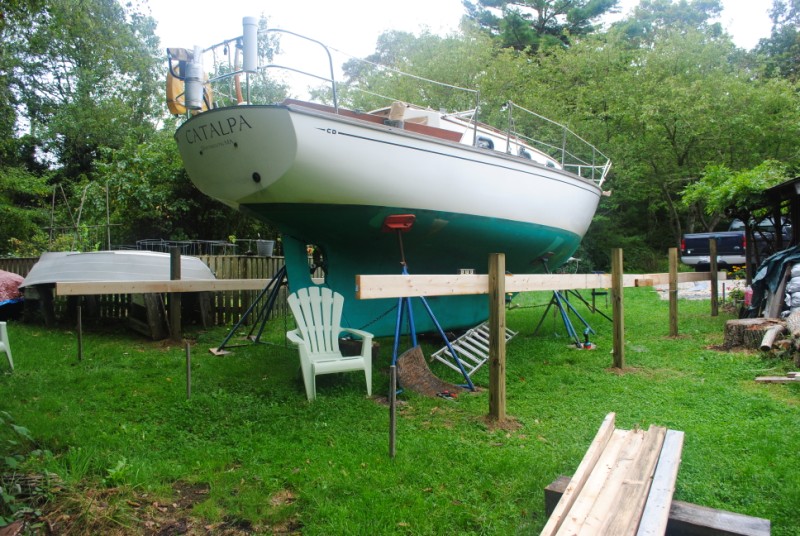
After looking at the amount of room I have in the shed I’ve decided to build staging all the way around the boat so I can work on the deck from chest height instead of kneeling on it as I work.

A side note- A few weeks ago Lynne and I went over to the Newport Boat Show. While there I was checking out some of the hardware in the Suncor Stainless booth. They asked me to take a nautical trivia quiz. I’m not big on trivia but I do read alot of nautical books. They called to inform me that I answered the most questions and won $500 worth of gear!!! Thankyou Suncor!

Plan B,C,D,etc…

Not being one to just give up I broke about 20 more straps. Plan B- was to steam bend these straps. Sounds crazy but I have done a bunch of steam bending in the past and have the gear. Steam bending is used to make boat ribs, chair arms, and other various curved pieces. Didn’t work. I’m not really sure why but these furring strips just refuse to bend.

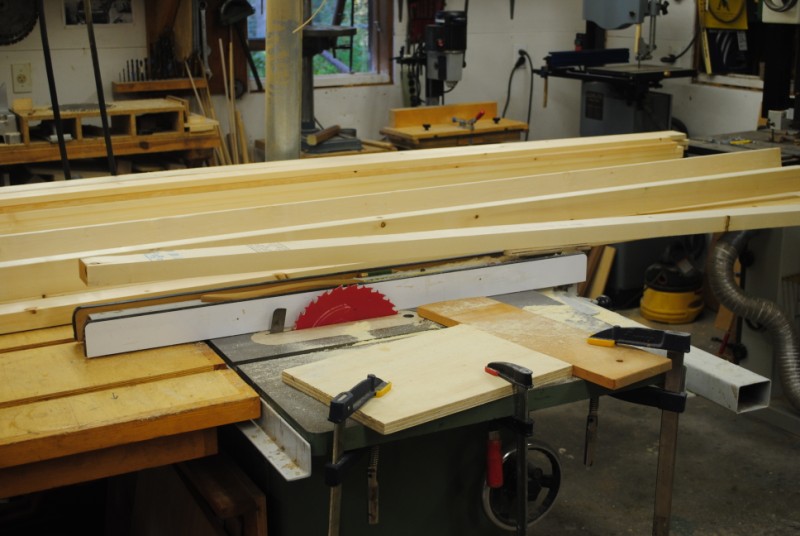
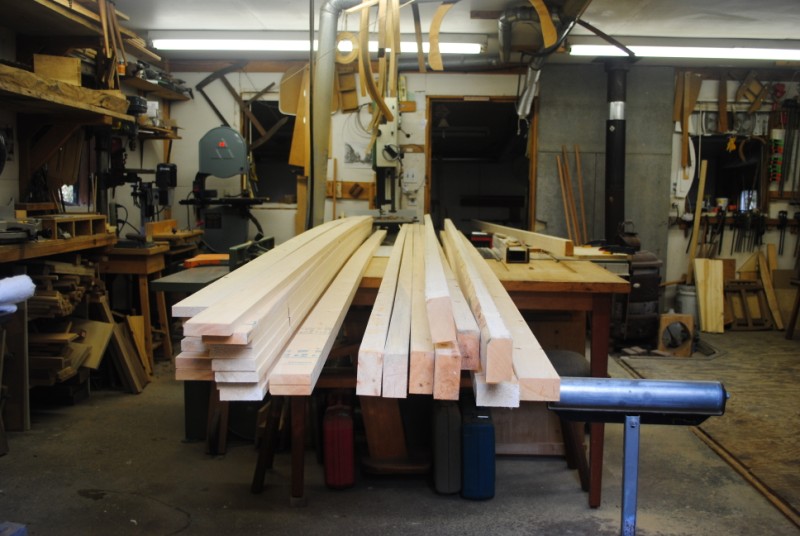
On to the next plan. I headed over to Fairhaven lumber for some quality wood. They allowed me to pick out a bunch of 14′ 2 x 6s. It’s great going to a real lumber yard. I wish more existed. Sadly the big box stores are putting them out of business. Anyway, I ripped all of these pieces down to strapping size.

I rip cut the 2 x6 down the middle and then took these pieces and ripped them on edge to get strapping that measures 3/4 thick by 2 3/4″.


Once I got the saw all set up it went pretty quickly. Maybe now I’ll have some decent bows

Thumb

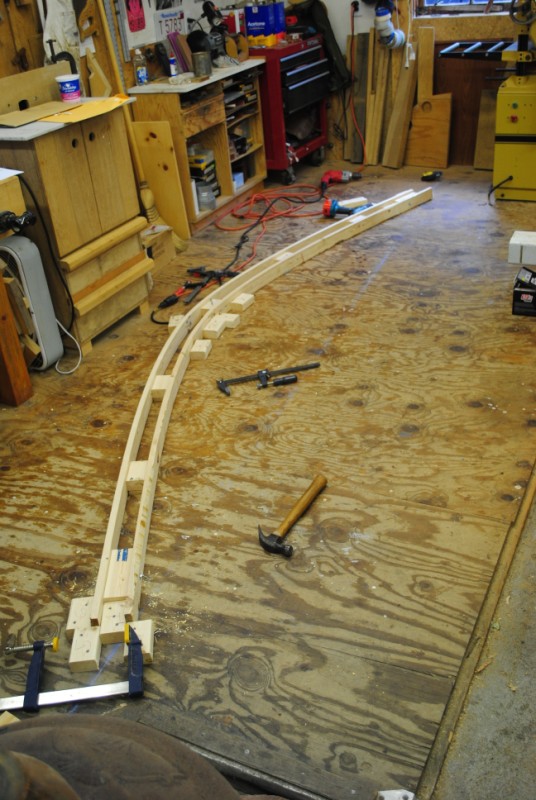
A bow shed needs bows. I thought this part was going to be an easy 2 day job but it didn’t quite work out that way. I built the bending jig and bought a bunch of wood from Lowes. As usual the quality of wood from big box (HDepot included) leaves a lot to be desired. After breaking a bunch of furring strips I decided to soak them down with a hose and let them warm up in the driveway. Results were better. 10-4-11_03

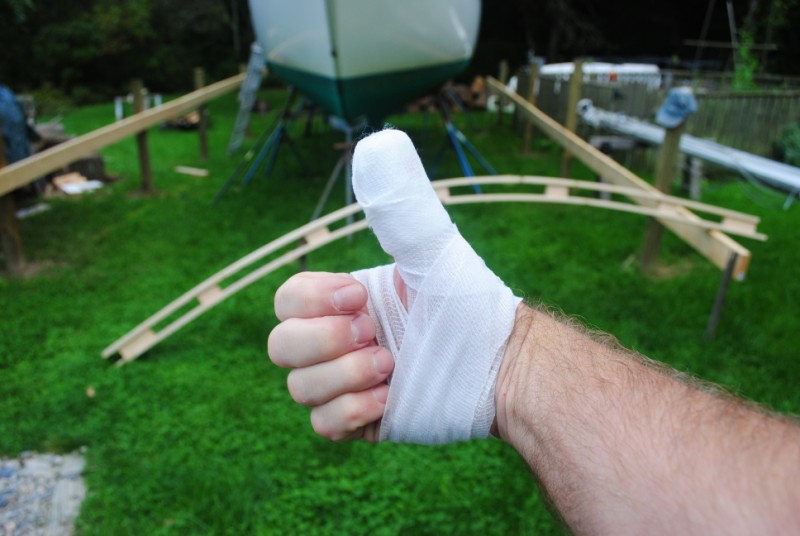
I managed to get a couple bows done. Even the best pieces of wood out of the bunch are questionable. I am convinced that they are overly dry. During the construction of the second bow I ran into a bit of a snag. I managed to drill a hole through my thumb while attaching some extra support blocks to the floor. The rest of my day included a trip to the doctor, tetanus shot, antibiotics, xrays, and a bunch of gauze. I guess I’ll take a few days off while things heal up.

10-4-11_08


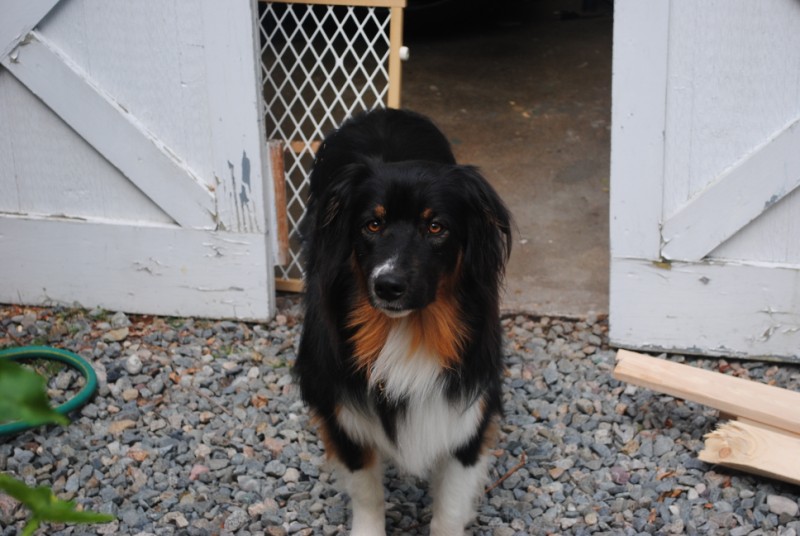
Skipper was somewhat traumatized by the yelling and blood but has since recovered.

10-4-11_01

Shed Foundation

With all the work I need to do this winter I decided Catalpa had to be inside. Indoor storage wasn’t an option, due to cost, so I’m building a shed over the boat. I debated over tents and other options but decided that a bow shed was a good option. I ordered plans from Stimson Marine. When done the shed is going to be 14′ x 32′. It’s basically a 12′ tall shed on top of a 2′ high knee wall. The yard is so out of level that the wall is nearly 4′ tall in the starboard aft quarter.

9-29-11_03


Motivational boat-building music

End of the Season

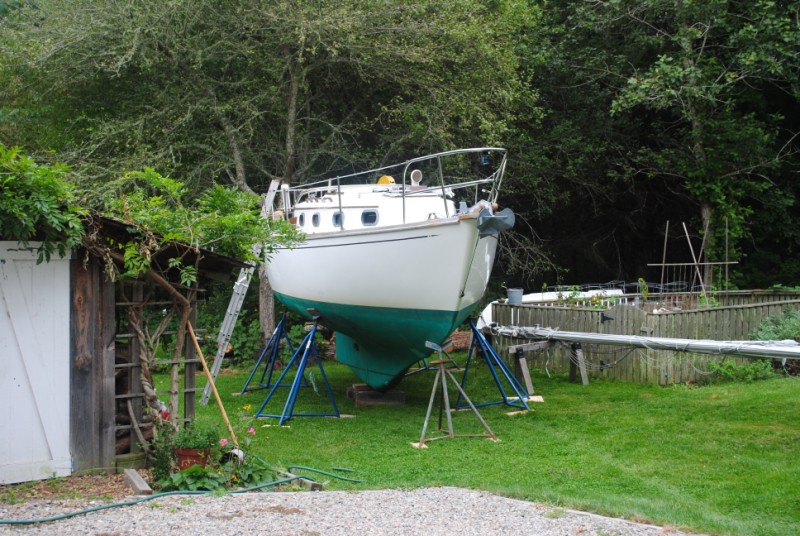
Catalpa is out of the water for the season. Normally we sail well into the fall but this year we decided to have the boat hauled early so I can get a bunch of work done on her. So here is Catalpa’s winter berth along side the vegetable garden and my shop. This is the first time we’ve stored the boat at the house. A little chainsaw work by me, some skillful truck driving by Davis and Tripp and she fits. Have plans to build a shed over the whole boat.

9-21-11_02